
Thandeka Nkambule: Why your social impact shouldn’t be your best-kept secret
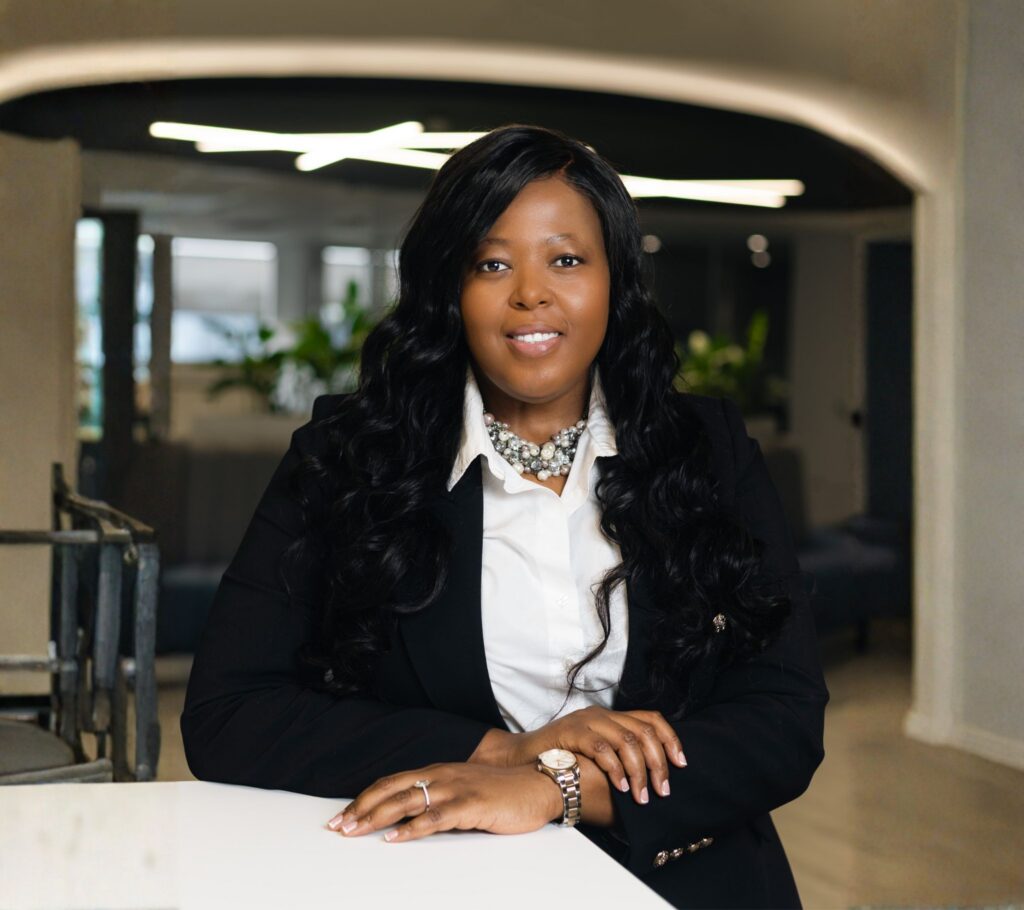
“If South Africa doesn’t work, business won’t work,” says Thandeka Nkambule, the Chief Transformation Officer at Sanlam.
How South African organisations can strengthen their social impact

In South Africa’s evolving corporate environment, measuring social impact has shifted from a compliance exercise to a strategic imperative.
Award-winning impact: Oceana Group, Top Empowered Business of the Year

By Shumirai Chimombe “At Oceana, our actions are based on the philosophy that those of us who live above the breadline have a responsibility to improve the lives of those who live below the breadline. We are mindful of our social obligations as responsible corporate citizens of South Africa and remain focused on positively impacting the lives of all our stakeholders and communities not only in areas surrounding our operations but across the country.” It is this focus on uplifting communities, as well as its dedication to transformation, empowerment, and job creation that earned the Oceana Group the Top Empowered Company: Business of the Year Award 2024. The Top Empowerment Awards recognise the businesses leading in transformation, that have displayed innovative leadership, and made a significant impact on the communities in which they operate as well as society at large. A leader in the global fishing and food processing industry The Oceana Group is a global fishing and food processing company with businesses that operate across the full value-chain – from catching or procuring, to processing, marketing, distributing and selling. As Africa’s largest fishing company with a history dating back over 105 years, it has been listed on the Johannesburg Stock Exchange (JSE) for over 75 years, as well on the Namibian (NSX) and A2X stock exchanges. Oceana has about 3 400 employees based across South Africa, Namibia and the United States. It operates about 48 fishing vessels and boats, and 8 production facilities spanning three countries on two continents – South Africa, Namibia and the USA, selling products to customers in 41 countries across Africa, North America, Asia, Europe and Australia. Their core seafood offerings include pilchards (Lucky Star), horse mackerel, hake, squid, and lobster. Recently they expanded to include other canned protein products such as vegetables, beans and corned meat. Their fishmeal and fish oil manufacturing business is primarily for the aquaculture, animal feed and pet food industries. A household name and home to one of South Africa’s most trusted brands One of Oceana’s flagship products is the iconic Lucky Star brand of canned pilchards which has been on retail shelves for nearly 70 years, and is instantly recognisable to every South African. Canned pilchards are a healthy and affordable protein that provide daily food security to millions of people. With its sophisticated global supply chain, Oceana is the world’s largest procurer of frozen pilchards. It is not constrained by localised catch availability, migration patterns or weather conditions. This ensures Lucky Star is able to keep its factories fully operational throughout the year to meet ever-growing demand. A commitment to positively impacting lives “Focused support for communities through our corporate social investment (CSI) initiatives is key to our commitment to positively impact lives. In delivering our social investments, we forge strong partnerships with communities, NGOs, NPOs, and the public sector. We focus on making sustainable and scale-able social investments through collaboration and flagship projects.” Oceana has also aligned its initiatives to the United Nations Sustainable Development Goals (SDGs) 2030 by providing support where most needed. Oceana’s response to natural and social disasters is a testament to their steadfast dedication to stepping up as a group and responding to community challenges when it matters most. Their intervention is critical in events when traditional support structures are overwhelmed or unprepared, requiring the group to step up. “It’s during these moments that we witness the true strength of a community coming together. We understand the importance of disaster relief and how critical timing and access can be – it’s about offering a helping hand, providing essential care and support, and ensuring that no one faces adversity alone. In times of need, our collective efforts make a profound impact, reinforcing our belief in the power of unity and compassion.” The Oceana Maritime Academy offers a diverse range of courses, spanning from essential seafaring skills to advanced management programmes in collaboration with a renowned business school. Their vision is to cultivate expertise within their staff and also throughout the broader fishing industry. Their mission is to foster a culture of empowerment and knowledge-sharing among all seafaring people through tailor-made programmes, with a particular focus on supporting small-scale fishers (SSF). “Our programmes and training stand as a testament to our unwavering commitment, not solely to education, but to the holistic betterment of our coastal communities, our oceans, and the individuals who rely on them.” Oceana’s range of Lucky Star products have become more than just a part of its brand; they are a symbol of hope and nourishment. Each can of pilchards represents a meal, a source of sustenance for someone in need as thousands of these cans are distributed to communities across South Africa. As one of the group executives aptly put it: “Our commitment to alleviate hunger and to positively impact lives remains our strength in changing the lives of those in need.” A legacy of investing in South Africa Oceana is committed to investing, retaining and creating jobs in the country, the Western Cape and particularly in the West Coast where the opportunities for both employment and business are even less. Thanks to its prudent cash and capital management the group has been able to invest in its business and create new jobs. This included investing up to R700 million in upgrades to factories and vessels to improve efficiencies, expand the Lucky Star brand, and take advantage of bolt-on acquisition opportunities. The new canned meat plant is the first investment of its kind on the West Coast in at least 20 years. This will enable the group to meet the increasing demand for affordable protein, including exports to the SADC region. As part of its legacy of empowerment the Oceana Group, through its Saam Sonke Trust, has distributed up to 7.8 million shares to its employees across various branches and entities, ensuring continued employee engagement and empowerment. A leader in promoting positive change The Oceana group has an excellent track record in black empowerment as indicated by the statistics. 85.04%
Imtiaz Sooliman – Gift of the Givers: Practicing diversity, equity, inclusion and belonging on a global scale

By Fiona Wakelin “Best among people are those who benefit mankind” Early days Beginning his humanitarian work in Mozambique during the 1990s, Dr Imtiaz Sooliman raised significant funds in just five days to provide boreholes, medical supplies, and malaria medication for the country. His philanthropic work continued in Iraq and Bangladesh – and then the life-changing trip to Istanbul, Turkey, where he received an instruction from teacher Sufi Sheikh Muhammed Saffer Effendi al Jerrahi: “My son, you will form an organisation. The name will be Waqful Waqifin (the closest translation is ‘Gift of the Givers’). You will serve all people of all races, of all religions, of all colours, of all classes, of all political affiliations and of any geographical location. You will serve them unconditionally.” Imtiaz did not speak Turkish but understood the instruction. How was that possible? “When there is a meeting of hearts, language is not necessary.” After receiving this message from the spiritual leader, Imtiaz Sooliman, at the age of just 30, built the Gift of the Givers from humble beginnings into what has become the largest disaster response, non-governmental organisation of African origin on the African continent. He and the team live by the maxim: “Best among people are those who benefit mankind”. He established the organisation with family support – started in a small 12m² room with a fax machine. The first major project was during the Bosnian civil war in August 1992, delivering 32 containers of aid and creating the world’s first containerised mobile hospital in 1993, including surgery theaters, ICU, X-ray, and other medical units. CNN reported the mobile hospital as ‘equal to any of the best hospitals in Europe’. The dedicated team is committed to addressing crisis situations, showcasing innovative problem-solving and the importance of partnerships across sectors. We met at the Arabella Estate after a few months of planning – the Gift of the Givers are in big demand (not surprisingly) and it took a while for us to both be in the same province at the same time. The time flew by and it was so refreshing, and so easy to speak with this ego-free, quick, solutions-orientated, energetic, humanity-first human being. During our conversation he had 4 cell phones on the arm chair, all on silent. There are so many disasters happening all the time around the globe at any given time, I asked Imtiaz how they choose where to go – and where the funds come from: “If a country has hit something major, the head of state must come on world TV and announce they have a problem. Only then will we respond. But sometimes before he or she makes the statement and we hear about, say, a tsunami in Indonesia, an earthquake in Haiti, an earthquake in Nepal, a typhoon in the Philippines, I put my teams on standby. Usually Africa comes first. Money matters? “My spiritual teacher said, ‘You will never need to look for money. People will come to you. You’ll never have to ask for money.’ We never have to go to people to ask for funds. We have no need for fund raisers in our organisation. “Things just happen. Everything falls into place. The teacher said, ‘things will work out for you’ – and they do”. Knysna fire response and Cape Water crisis – diversity in action The Gift of the Givers responded to the 2017 Knysna fires with medical teams, food for firefighters, and essential supplies and set up a warehouse operation in the Checkers parking lot to coordinate massive aid distribution. This was diversity in action with teams of all backgrounds working together. They responded to the Western Cape water crisis by drilling 238 boreholes at a cost of R19-million, saving farming communities and livestock; and successfully navigated the flood response by coordinating multiple stakeholders, with partnerships across political parties, race, and class to reach isolated communities. CSI, ethics, economic philosophy and personal values We spoke about how Corporate Social Investment (CSI) is evolving from ‘ticking boxes’ to meaningful engagement and corporates in South Africa are developing a purposeful CSI focus: “CSI – we don’t just tick the box anymore. Now the CEOs call and ask for us to take them and their staff to be on site to see. To feel what it is like to be on the ground. Big companies like Sibanye-Stillwater, Bonitas, FNB, see first-hand where the CSI money is going. They feel the words of the people. “And we are growing. Now because we have got a new thing called virtual. They call you any time. On 31st December 2024, afterhours, the FNB guys called – ‘We’ve got all these fires in Cape Town. On the 2nd of January, the money will be in your account’. “ And when you think of COVID, the ethical business practices of keeping staff employed – ultimately benefitted the economy”. I had to ask about his take on the ramifications of the Trump administration withdrawing funding from Africa: “I am very happy about it. We should have cut ties long ago. We don’t need to have a begging bowl. We are self-sufficient and have the resources to manage our own needs. Companies are already calling to see how we can fill the gap. America is one country in the world. There are 199 others and we are about to sign an agreement with the Association of Southeast Asian Nations”. And what gives him joy? “The relief of suffering – a mother feeding a child, restoring sight to the blind – when a person has cataracts and they open and they can see. Or they can hear you because of a hearing aid. It’s priceless. Absolutely, absolutely priceless. “When I was in Somalia I saw a child who had been bed-ridden for 8 months and sepsis was creeping into the bone. Nobody could fix it. I brought my doctors from South Africa. They did the operation in 20 minutes. The father gets up and says, I like to appreciate you.