
Why the government has turned to PPPs to clear the infrastructure backlog
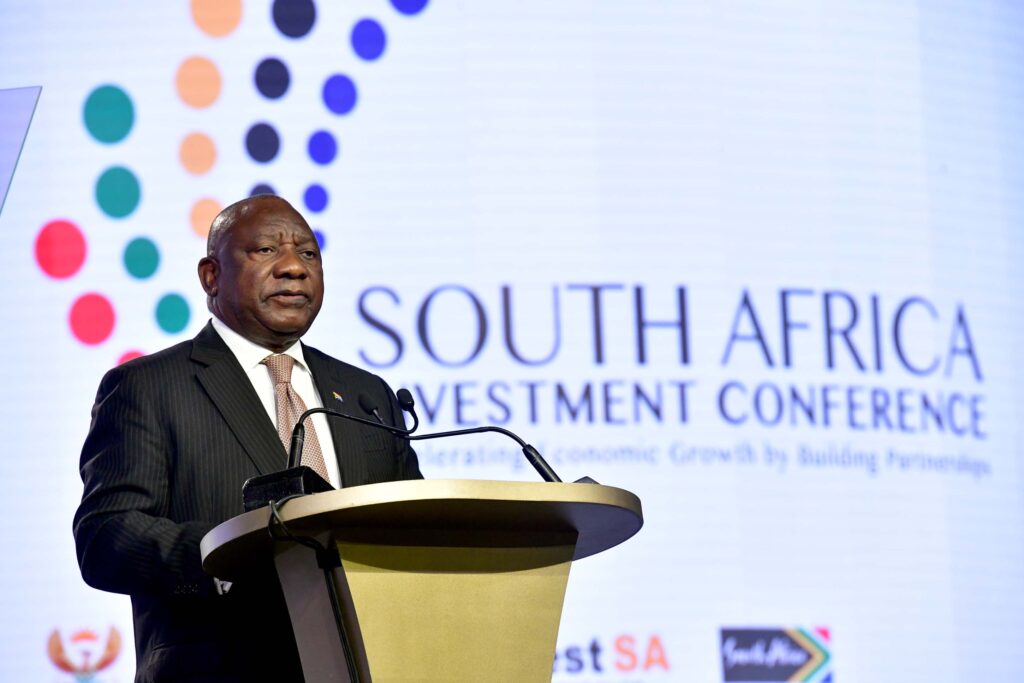
While South Africa’s own foray into PPS began in the late 90s, it is only in recent times that they have been seen as one of the most viable financing solutions to the state’s problems.
VAT? What’s that?
By Koketso Mamabolo What’s VAT? Three simple letters have dominated headlines since the unprecedented delay of the budget speech in February, drawing speculation from all corners of the country, whether it be in the corridors of power, or in homes, on sidewalks, in public transport and all the places where people interact as they go about their lives, where every cent counts. Value-added tax (VAT) is the main indirect tax on goods and services. For most consumers it’s an extra cost we rarely think about unless we look closely at our till slips. We know that when we pay R100 for an Uber trip, for example, R15 goes to the South African Revenue Service (SARS). For Uber, and many other businesses, it’s a cost they factor into the final price, and revenue which they then pay to SARS. Referred to as ‘traders’ or ‘vendors’, who make taxable supplies of more than R1-million per annum, they have to register, and it must be charged on goods and services at every stage of production and distribution, including on importation and imported goods. Why VAT? In her book The Deficit Myth, economist Stephanie Kelton argues that there are four reasons why there are taxes of any kind. If the government allowed consumers to merely spend without taking a portion it could lead to an oversupply of the rand which would mean too much money would be ‘chasing’ too little goods and services. In other words, there would be more money than things to spend it on, otherwise known as ‘inflation’, which is one reason Kelton argues that we are taxed. A second reason, she says, is that tax can be used as a tool to change the distribution of wealth and income. With widespread inequality, it has long been referred to as a possible way of reducing the gap between rich and poor e.g. wealth tax. Governments can also use taxes “to encourage or discourage certain behaviours.” The ‘sin’ tax on tobacco products and alcohol, which always goes up (often above inflation), is an obvious example of a tax which is aimed at disincentivising consumption, as is carbon tax and South Africa’s progressive sugar tax. A fourth reason, one which is behind the increase the Finance Minister has proposed, is that taxes “enable governments to provision themselves without the use of explicit force.” The idea being that if the government stopped requiring taxpayers to pay using their rands there would be less taxpayers leaving the government with less money to spend on public goods and services such as roads, schools, healthcare facilities, and the salaries of the people needed to provide it all. With the initial 2% VAT hike National Treasury was expecting SARS to collect R58-billion in revenue to bolster efforts to fund a ‘growth’ budget which would dish out additional resources for education and healthcare, among other things. While taxes are an old instrument of funding the work of the state, VAT is a relatively new concept in South Africa, introduced only three years before the country became a democracy. Before VAT we had GST, the General Sales Tax, which was introduced in 1978. It began at a modest 4% but rose to 12% in early 1985. Unlike VAT, which has a limited number of goods and services which are exempt, GST was not charged on most food and most services. It was an administrative strain and did not generate much tax revenue. Enter VAT in 1991. What goes up… must go up? VAT was introduced as a way of simplifying indirect tax administration and broadening the tax base, creating a significant source of revenue for the state. It started at 10% and in 1993 was increased to 14%. The next increase was a quarter of a century later in 2018, to 15%. And now, in May this year, if the proposal is accepted, we’ll see a 0.5% increase, with another half a percent on the cards in April next year, pending review. In both instances, 2018 and 2025, the budget deficit has been a significant reason why this indirect tax was chosen as a means for collecting revenue. In short, if the government has to spend more than what SARS collects then they are left with a deficit. There are different schools of thought around how governments can proceed. Kelton belongs in the camp which, as the title of her book The Deficit Myth suggests, argues that the state is the sole issuer of a currency and is able, within certain limits, to fill the deficit by using the power of reserve banks to print money. In economic circles this concept is considered somewhat of a heterodox one, and the more orthodox line of thinking is wary of the inflationary effects of printing money, among other criticisms of what is called ‘modern monetary theory’. The dominant, orthodox strain approaches the deficit with caution, opting to incur debt as a way of filling the gap, and then working hard to service the debt and not incur too much more debt relative to the country’s gross domestic product (GDP). When VAT was first introduced, in 1991, the country’s debt was 33.9% of GDP, according to the World Bank. It had shot up to 59.1% by 2018 and is now sitting staggeringly close to 80%. National Treasury’s approach has been focused on debt as the main issue to contend with and has sought, quite aggressively, to tame it. From the time the ‘Governor’, the late Tito Mboweni, was called in to steer the ship as Finance Minister, through to his successor, Pravin Gordhan, until Hon. Enoch Gondongwana’s current tenure, austerity has been the main instrument used to try and deflate the balloon. There are many economists, like Kelton and the passionate South African economist Duma Gqubule, who would highlight that austerity has clear, negative effects, leaving a shortage of public servants and shortfalls in funding for necessary goods and services. The VAT hike, the Finance Minister explained, the day after “Budget 2.0”,