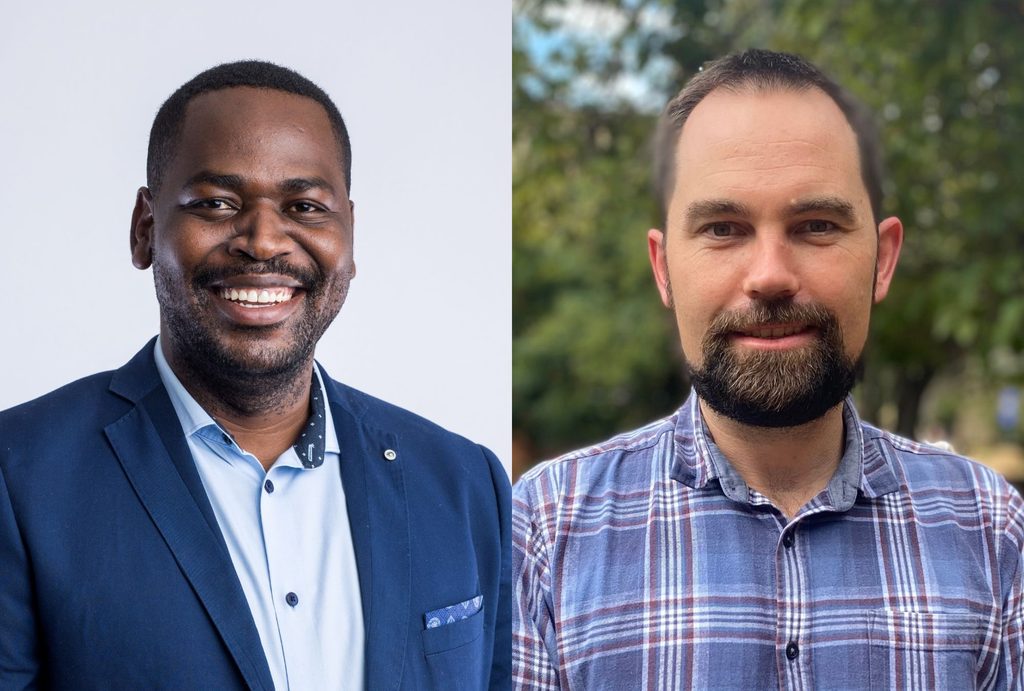
By Professor Glen Nwaila, director of the African Research Centre for Ore System Science at the University of the Witwatersrand (Wits) School of Geoscience and Professor Grant Bybee, head of the Wits School of Geosciences
There are few moments in history when a common global purpose aligns so clearly: ensuring the sustainability of our planet and its people. This shared goal has created a huge demand for important minerals that are essential for the transition to a greener, cleaner economy.
To help us grasp the scale of this endeavour, the International Energy Agency’s Net Zero Emissions by 2050 Scenario forecasts that aggregate demand for copper, lithium, nickel, cobalt, graphite and rare earth elements will rise from under 10 megatonnes (Mt) in 2020 to over 40Mt a year by 2050. However, persistent bottlenecks in legacy supply chains, underinvestment in exploration, shortage of skills and escalating geopolitical tensions all threaten to derail this surge.
Exploration budgets illustrate the challenge. In 2023, spending on exploration for precious and base metals fell by 3% from the previous year’s peak, while exploration allocations for critical minerals such as copper, lithium, nickel, rare earth elements and uranium increased. New discoveries and brownfield expansions must accelerate to satisfy future needs, despite continuing financial and political uncertainty.
Major corporations are responding with renewed capital and technology commitments. Deloitte’s 2024 CxO Sustainability Report found that 85% of C-suite executives had increased sustainability investments over the previous year, up from 75% in 2023, and half had deployed digital solutions to meet climate targets.
An EY survey of 353 senior mining executives identified local community impact as the foremost environmental, social and governance (ESG) risk with 64% marking it as their most pressing concern, followed by tailings and waste management at 55%, water stewardship at 51% and achieving net-zero emissions at 46%.
Additionally, 92% of institutional investors fear that sustainability measures that are not tied to operational and market dynamics could undermine short-term returns, underscoring the need for a unified systems framework that aligns economic incentives with environmental stewardship.
Policy and governance must evolve in tandem. Nearly 48% of African nations have introduced export curbs to capture more upstream value. Zimbabwe’s government has banned the export of raw lithium from 2027, a move that has already seen a revenue increase from $70-million in 2022 to $600-million in 2023.
Meanwhile, leading voices call for an international materials agency to coordinate critical minerals governance, centralise data collation and support equitable negotiations for developing economies. Such an institution would de-risk large-scale projects and streamline the permitting process, enabling blended finance structures such as green bonds and public-private partnerships to underwrite sustainable exploration and processing.
Technological innovation and the circular economy offer powerful levers to rebalance supply and demand. Recycling and scrap recovery could meet up to 60% of cumulative demand for metals such as aluminium and copper by 2050, and about 46% for cobalt.
In South Africa, circular mining initiatives in the historic gold-producing Witwatersrand Basin are reprocessing tailings with adaptive hydrometallurgical circuits, recovering gold while reducing water consumption by 30%. In the Bushveld Complex, platinum group elements and base metals are being recovered from legacy tailing storage facilities. Similar initiatives are being piloted in Australia and as part of the United Kingdom’s plans to revive tin mining in Cornwall.
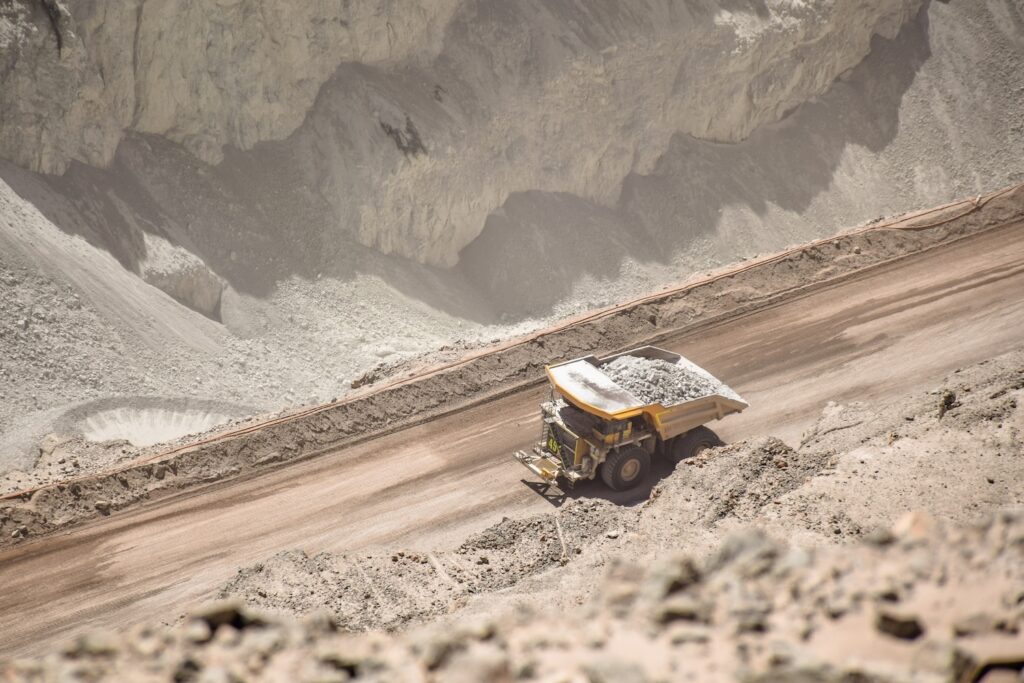
Digital twins of mine sites (virtual replicas of physical mining assets), powered by real-time sensors and machine-learning models, optimise ore blending and energy use on the fly. Autonomous drilling rigs and haul trucks cut fuel consumption and enhance safety, while remote operations centres enable seamless integration of solar, wind and hydrogen power in high-load metallurgical plants.
Early trials at the Valterra Platinum (formerly Anglo American Platinum) Mogalakwena mine in northern South Africa have shown that integrating on-site renewable power with a hydrogen battery-powered hybrid haul truck can reduce diesel-related greenhouse-gas emissions by up to 80%.
In Sweden, a hydrogen breakthrough ironmaking technology pilot at Luleå has demonstrated hydrogen-based direct reduction in a continuous‐feed furnace, producing over 5 000 tonnes of fossil-free sponge iron during 61 weeks of testing through to 2024, and removing roughly two tonnes of CO₂ for every tonne of iron produced. This represents one of the world’s first large-scale pyrometallurgical trials using green hydrogen in place of coke (a carbon-rich fuel derived from coal).
The task is urgent. With demand for critical minerals set to quadruple by 2050, piecemeal measures will no longer suffice.
Mining must evolve into a circular, data-enabled ecosystem in which waste streams become secondary reserves and digital transparency underpins stakeholder trust. This requires a fundamental shift from compliance to a holistic systems framework that aligns policy, investment, technology and social licence at every stage.
Blockchain-enabled traceability platforms are rapidly becoming indispensable to ethical and sustainable mining. The European Union’s upcoming transparency portal under the Conflict Minerals Regulation will require downstream importers to share due-diligence data on metals and minerals, ensuring compliance with Articles 3 to 7 and providing regulators, communities and end users with real-time insights into origin and handling.
In Chile, a pilot blockchain scheme for distributed energy and carbon markets has demonstrated how linking renewable energy generation data to mineral certification can support artisanal producers, enhance local value capture and build consumer trust in clean-energy supply chains.
Meanwhile, the World Gold Council’s Gold Bar Integrity Programme, developed in partnership with the London Bullion Market Association, records each bar’s provenance and transaction history on a distributed ledger, guaranteeing ethical sourcing, fair royalties for mining communities and immutable provenance records for global investors and consumers alike.
These examples demonstrate that true sustainability reaches far beyond technical efficiency to encompass social inclusion and environmental justice.
Local communities must be partners in decision-making from exploration through to closure, beginning with transparent, culturally sensitive consultation; progressing through local procurement, skills training and employment; and culminating in rehabilitation schemes co-designed to deliver agriculture, conservation or renewable-energy hubs.
Investing in education, ranging from vocational training in geoscience, metallurgy and mechatronics to data science, enables durable economic diversification, cultivates a pipeline of skilled professionals who have multicommodity expertise and secures the social licence on which mining’s future depends.
As we at Wits Geosciences often say, there has never been a more critical moment to empower our communities, champion geosciences as a catalyst for lasting development and inspire the next generation – reaffirming geosciences’ enduring role as an accelerator of sustainable mining transformation.
Glen Nwaila is an Associate Professor of Geometallurgy and Machine Learning at the University of the Witwatersrand (Wits) and the Director of the African Research Centre for Ore Systems Science (CORES).
Grant Bybee is an Associate Professor of Geochemistry and Petrology in the School of Geosciences at the University of the Witwatersrand.