
Turning B-BBEE compliance into real business value

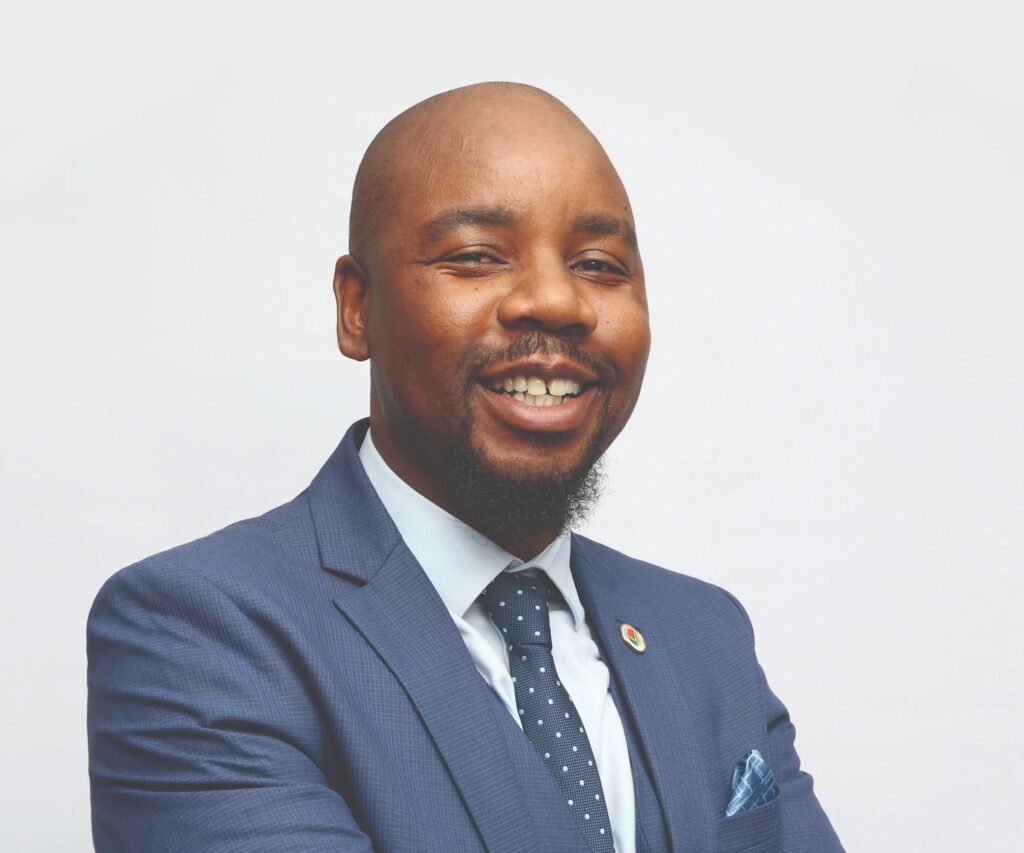
“At The BEE Chamber, we support businesses in navigating these requirements pragmatically. Our role is not to advocate for every aspect of the legislation, but to help companies interpret and implement it in ways that minimise risk while unlocking real commercial opportunities.”
The intersection between public procurement and B-BBEE
The state has a golden opportunity to enforce localised procurement across all spheres of government, at national, provincial, and local levels, including within state-owned entities.
Is B-BBEE now a deal-breaker in M&A?

By Ginen Moodley Broad-Based Black Economic Empowerment (B-BBEE) is no longer a side issue in mergers and acquisitions (M&A) – however, the answer to whether it is a true deal-breaker depends on how you look at it. Legally, the framework does not yet give regulators the authority to block a deal outright on B-BBEE grounds. Commercially, however, a weak empowerment profile can derail a transaction just as effectively – through delays, onerous conditions, reputational damage or lost investor confidence. The Competition Commission has confirmed that B-BBEE will now form part of the public interest assessment in merger approvals. This shifts due diligence beyond financial and operational metrics to include a target company’s empowerment status, ownership structure, and scorecard history. A poor B-BBEE profile may not be enough to stop a deal legally, but it can slow it to a crawl, invite tough conditions or spark public backlash that erodes deal value. In July, Parliament’s Portfolio Committee on Trade, Industry and Competition has called for greater transparency, fairness, and accountability in M&A deals, particularly with regard to imposing public interest conditions in terms of transformation and the inclusion of historically disadvantaged persons (HDPs). The Trade, Industry and Competition Committee has gone further, urging the Competition Commission to adopt an activist approach by publishing details of historically disadvantaged partners in approved transactions, creating a centralised database to help companies identify empowerment participants, and embedding lock-in periods to ensure ownership structures deliver real value. These signals point to a regulatory and political environment where transformation is no longer negotiable.This is not only a policy debate, it is already playing out in the market. When Heineken’s acquisition of Distell and Namibia Breweries was approved in April 2023, the deal was cleared on condition that the new entity, HEINEKEN Beverages, committed to substantial transformation initiatives. These included an ambitious investment plan of more than €500m over five years, the construction of a new brewery and maltery, a supplier development and localisation fund, and a Tavern Transformation programme to support 1 000 tavern owners. The heightened pressure in M&A coincides with broader compliance reforms. In April 2025, the Minister of Employment and Labour published final employment equity targets for 18 sectors. Designated employers must submit five-year plans by 31 August 2025 or face fines and exclusion from state contracts. The burden of proof has also shifted: companies must now demonstrate valid reasons for falling short. Compliance is being measured on outcomes, not intentions. Small businesses are also under the spotlight. Exempted Micro Enterprises must now file B-BBEE affidavits that include industry classification codes and confirmation of permanent black ownership, submitted directly to sector charter councils. This aims to curb fronting and ensure empowerment translates into genuine participation. Meanwhile, the legal profession has been reshaped by the Legal Sector Code. Firms are required to demonstrate 50% black ownership, spend 3.5% of payroll on black skills development, and procure more from black-owned legal service providers. Similar industry-specific codes are tightening across the economy, reflecting a broader move from broad-brush compliance to precise, enforceable sector obligations. Ownership remains one of the trickiest areas. The Codes of Good Practice assess not just shareholding but also voting rights, economic interest, and the sustainability of structures. Community trusts, employee share schemes, and equity equivalents are useful mechanisms, but when poorly designed, they risk collapsing under scrutiny. In an M&A environment, these weaknesses can undermine approvals or unravel a deal later. For dealmakers, this means that B-BBEE due diligence can no longer be superficial. It is not enough to glance at a scorecard; regulators and stakeholders are scrutinising the substance behind the numbers. Ownership structures, employment equity compliance, procurement practices, and even historical scorecard performance can all influence whether a deal is approved smoothly or delayed with conditions. So, is B-BBEE now a deal-breaker in M&A? From a legal perspective, the Competition Commission cannot yet veto a merger solely on B-BBEE grounds, but commercially the risks are real: a weak empowerment profile can translate into reputational damage, loss of investor confidence, and transaction timelines stretching out indefinitely. Transformation has become a decisive factor in whether deals succeed or stall. Businesses that understand this distinction and embrace transformation as a strategic necessity rather than a compliance burden will not only secure smoother approvals but also build credibility and resilience in an economy where inclusivity is inseparable from growth. Ultimately, the question is not whether B-BBEE is a formal deal-breaker under current law, but whether businesses can afford to treat it as anything less. The direction of policy, enforcement and market expectation is unmistakable. Dealmakers who integrate transformation into their transaction planning will navigate approvals with greater certainty, protect deal value and position themselves for long-term relevance in an economy where inclusivity is fast becoming a cornerstone of commercial success. Ginen Moodley is a corporate and commercial attorney and the founding director of Moodley Attorneys Incorporated (MAinc), a South African law firm specialising in Business Advisory, Commercial Transactions, Dispute Resolution, and Estate Planning.
South Africa’s business elite: This is your moment to shine

The 24th annual Nedbank Oliver Top Empowerment Awards returns on 31 July 2025 at the prestigious Sandton Convention Centre, celebrating the organisations driving real transformation, empowerment and inclusive economic growth in South Africa. With entries closing in just one week, this is your final opportunity to stand among the nation’s most powerful brands and visionary leaders. Join the icons of industry You’ll be in world-class company alongside sponsors such as Nedbank, The South African Local Government Association (SALGA) and this year’s participants, including renowned names like Old Mutual, Nestlé, Sasol, Sanlam, Mondi Group, and Schneider Electric together with over 700 VIP delegates, ranging from C-suite executives to senior government stakeholders. The evening promises to be a celebration of impactful initiatives and transformative leadership. Past keynote speakers and Lifetime Achievement Award recipients have included President Cyril Ramaphosa, former President Thabo Mbeki, Mr Trevor Manuel, Dr Mathews Phosa, Dr Anna Mokgokong and Professor Thuli Madonsela, among other national icons making this a stage where legacy meets leadership. Why leading companies enter: Being named a winner or finalist at the Nedbank Oliver Top Empowerment Awards places your brand in a league of excellence – boosting investor confidence, attracting top-tier talent, and giving you marketing firepower that translates into long-term growth. Your win becomes a badge of honour, a powerful story of purpose, and a competitive edge in a fast-moving market. Your platform for national recognition Whether you’re a JSE-listed company, multinational enterprise, or one of South Africa’s Top 500 companies, this is your opportunity to take the spotlight and showcase your commitment to empowerment and transformation. Enter now before entries close. Click here to submit your entry. Questions? Contact: quarnita.jumat@topco.co.za
Entries close soon – Nedbank Oliver Top Empowerment Awards 2025

The countdown is on! The prestigious 24th annual Nedbank Oliver Top Empowerment Awards returns on 31 July 2025 at the Sandton Convention Centre, honouring South Africa’s trailblazers in transformation, diversity, and empowerment. With just days left to enter, organisations from all sectors are urged to submit their entries and gain national recognition on the country’s leading empowerment stage. As the Platinum Partner, Nedbank continues to champion inclusive economic growth by celebrating companies and individuals that are actively building a more equitable and transformed South Africa. The awards spotlight excellence in B-BBEE, leadership, innovation, and sustainable impact, offering a platform to share transformation success stories and inspire change across industries. Entries close soon! Enter now and secure your place among South Africa’s most empowered changemakers. Meet the 2024 winners here. Submit your entry by visiting this link. For more information on the awards and for assistance with your entry, please email quarnita.jumat@topco.co.za.
Youth employability in South Africa

By Ray-Ann Sedres, Head of Foundation, Sanlam Driving socio economic inclusion across our business In my role, I am driven by a passion to ensure that our business is a beacon of Diversity, Equity and Inclusion (DEI) across all territories in which we operate. I believe that our success is intertwined with the success of our stakeholders, and that’s why my team and I work determinedly to ensure that our transformation interventions are executed across the business, aligning with our business strategy. We take a holistic approach to DEI, overseeing initiatives that promote financial inclusion through our products and services. Increasing access to markets and reducing inequality Through our supply chain, we strive to increase access to markets for SMMEs and partners, providing them with the resources and support they need to thrive. We also work to reduce the risk protection gap by enabling financial education and business development support for the SMMEs and the broader society, thereby empowering individuals and communities to make informed decisions about their financial futures. Compliance and beyond In addition to driving DEI initiatives in South Africa, my team and I also oversee our Broad-Based Black Economic Empowerment (B-BBEE) verification process, ensuring that we meet our compliance obligations. But we don’t stop there – we also guide our business’s socio–economic programmes that address pressing socio-economic challenges facing the communities., recognising that our success is inextricably linked to the success of the communities we serve. In this role, I am committed to creating a more equitable and just society, where everyone has the opportunity to thrive. Barriers preventing young people in South Africa from securing meaningful employment South Africa faces significant challenges in terms of youth unemployment, with the unemployment rate among youth being around 55%. Several barriers contribute to this issue, and some of the biggest barriers to young people securing meaningful employment include: These barriers make it challenging for young people in South Africa to secure meaningful employment. Addressing these challenges will require a comprehensive and collaborative approach from government, civil society, the private sector, and individuals. Supporting South African youth through partnerships with organisations such as Youth Employment Services and the Youth4Tourism (Y4T) programme The Youth4Tourism (Y4T) initiative, is a collaborative effort that aims to tackle the country’s pressing youth unemployment crisis. This bold endeavour brought together leading corporates, with Sanlam at the forefront, to empower young minds and spark economic growth. The journey began with a clear vision: to upskill youth in the Gig Economy, unlocking employment and entrepreneurial opportunities that would stimulate the critical tourism sector, intertwined with other industries. This strategic alignment supported Sanlam’s transformation and sustainability goals, paving the way for youth empowerment, economic growth, job creation, and industry development. As Y4T embarked on its maiden voyage, the results were nothing short of remarkable. In Phase One, which spanned from October 2023 to July 2024, the initiative created over 1 040 jobs, surpassing its initial target of 1 000. Fifteen corporates, including Sanlam, joined forces to drive this movement, with repeat support from several partners. The youth beneficiaries of Y4T secured an impressive R2-million plus in gigs, directly benefiting from their newfound skills. Moreover, 35 young entrepreneurs took the bold step of establishing their own businesses. During this phase, we held the Y4T Exhibition, which was a resounding success, showcasing the talents and achievements of the young participants. As the programme continued to gain momentum, it expanded its reach, placing youth in international chambers of business, including the Italian, Spanish, UK, Indian, and Swiss chambers. The focus then shifted to supporting 60 youth-owned SMMEs (Small, Medium, and Micro Enterprises) from the first-year cohort. The goal was to catapult them to the next level, and the progress was astounding. 48 businesses had initiated the process of digitizing their financial records and ensuring tax and CIPC compliance, making them eligible for Enterprise and Supplier Development opportunities. Youth-owned businesses began integrating into corporate supply chains of YES corporate partners. As the journey continues, the focus remains on supporting these ambitious youth, developing a further pipeline of 1 000 new participants, and enhancing entrepreneurship and job creation opportunities. The goal is clear – to create a thriving ecosystem that fosters growth, innovation, and prosperity for generations to come. Youth4Tourism is more than just an initiative – it’s a beacon of hope, a testament to the power of collaboration, and a reminder that, together, we can create a brighter future for all. Integrating diversity, equity and inclusion into Sanlam’s transformation agenda. As mentioned earlier, we take a holistic and integrated approach to driving diversity, equity and inclusion into the business and touch our entire value chain. Through the products and solutions, we have on offer in driving financial inclusion, to the diversification of our staff complement and supply to mention only a few areas. Our journey began by examining our business’s value chain, identifying areas where we could integrate DEI principles to create a more equitable and inclusive environment. I worked closely with our leadership team to develop and execute transformation interventions that are aligned with our business strategy, ensuring that our efforts were deliberate, measurable, and sustainable. Are we on track to achieving Vision 2030? Youth unemployment is a pressing concern in South Africa, and partnerships between the government and private sector play a crucial role in addressing this issue. In my view, the effectiveness of these partnerships is mixed. On the positive side, initiatives such as the Youth Employment Service (YES) and the Presidential Youth Employment initiative have shown promising results in creating job opportunities and providing training for young people. The private sector has also made significant contributions through apprenticeships, internships, and mentorship programmes. However, despite these efforts, youth unemployment remains a significant challenge. Regarding Vision 2030, South Africa’s National Development Plan aims to reduce unemployment to 6% by 2030. While there have been some improvements in recent years, the current pace of progress suggests that achieving this target might be challenging. To get back on track, I believe that
Meaningful enterprise development: What does it mean-and where are we in South Africa?

By Livhuhani Mukhithi, Director: Broad-Based Black Economic Empowerment: Policy, Institutional Management and Advocacy – dtic The growth and development of economies throughout the 20th and the 21st centuries have been built behind deliberate planning, and undertaking by state actors, private players and other social partners. These initiatives have been anchored around principles of broadening economic participation and inclusion across sectors in the economic mainstream. Support, development and participation of enterprises in the economic mainstream should be premised on the interconnectivity between MSMEs, existing multi-national corporations (MNCs), and original equipment manufacturers (OEMs) within their global value-chains (GVCs). In the South African context, a recently commissioned study on Enterprise and Supplier Development (ESD) by the B-BBEE Commission (2022: 18) hammers on the imperative that Enterprise and Supplier Development forms part of the B-BBEE legislation. The ESD programme’s goal, according to the B-BBEE Commission, is to “create a conducive environment for the building of sustainable relationships between corporate South Africa and black entrepreneurs to facilitate access and transformation of value chains.” B-BBEE is a government programme that aims to correct past wrongs and spread the nation’s wealth among all races and genders, as well as promote growth, development, and entrepreneurial development. B-BBEE is the policy implementation through the B-BBEE Act (as Amended) and the Codes of Good Practice, which provide the foundation for ESD policies for big corporations. As ESD development and support has proven to nurture and consolidate technological development and uptake amongst MSMEs globally, Lee (2017: 03) contends that private companies (locally-owned companies) need to be able to move up the value-chain to higher-value added goods, based on continued upgrading and improvement, and technological innovation. This stands to effect structural transformation and inclusive participation in the mainstream economy. In praxis, a study on Enterprise and Supplier Development (ESD) by the B-BBEE Commission (2022: 17) qualifies the posture that holds that the ESD is not just a South African notion; it’s a global movement that has proved to boost economies, diversify supply chains, and create jobs. The bulk of businesses and a sizable share of employment in both developed and emerging economies are SMMEs. These enterprises, however, face many obstacles that prevent expansion, such as poor technological capabilities, limited human resource capacity, and restricted access to capital. Furthermore, the GIBS White Paper on Enhancing Enterprise and Supplier Development Ecosystem Effectiveness in South Africa (2024: 8) contends that there is more consensus in the implementation challenges of ESD programmes such as limited resources, misalignment of corporate and MSME programme participants, and inadequate monitoring and evaluation. These challenges are at the core of botched ESD programme implementation. South Africa’s effort to increase participation of MSMEs in the economic mainstream hinges upon a plethora of support mechanisms. According to the report on the State of the Small and Growing Business Sector by ANDE (2024: 04) the South African entrepreneurial ecosystem requires innovative solutions to increase the available finance, improve access to markets, reduce bureaucratic burdens, and strengthen the capacity of small businesses and start-ups. The report also examines the state of the Small and Growing Businesses (SGB) sector in South Africa as of 2023 by assessing the amount and type of financial support available to enterprises, the type of capacity development offered, and trends in the policy landscape that affect the entrepreneurial ecosystem. It is also vital to acknowledge that the legislative ecosystem that is in existence to support entrepreneurship, enterprise and supplier development requires updating and reviewing to provide a blueprint for the building of a vibrant MSME sector. The GIBS report concedes that South Africa has a relatively robust financial and capacity-related development landscape for MSMEs. The report State of the Small and Growing Business Sector identified 197 active funding sources offering financing in the form of loans (43%) and equity (41%), with the remainder made up of grants (16%), quasi-equity (7%), and guarantees (5%). Nevertheless, the credit gap among MSMEs continues to be significant. Additionally, the South African economic mainstream’s relationship with MSMEs is characterised by relationships that are both progressive to the country’s reindustrialisation efforts and the ones that are only driven by the compliance imperative (informed by the tick-box approach for compliance purposes). The magnitude to which MSMEs are connected, or not connected, to the GVC of MNCs differs significantly and varies from strategic high value chain integration to non-core value chain integration. On one end, certain MNCs conduct extensive value chain and supplier opportunity analysis to inform the identification of supplier opportunities. At the other end of the scale, other MNCs and corporates link MSMEs to less strategic, non-core supply opportunities. Some corporates have a mixed ESD approach in terms of linking MSMEs to both core and non-core supply opportunities. As contained in the study commissioned by the dtic (2019), the five most common benefits reported by 65 MSMEs surveyed and participating in Enterprise Development programmes are in order of frequency: 1. Business management skills & systems (31%); 2. Networking and business opportunities (14%); 3. Market access (12%); 4. Financial support (9%); 5. Company (marketing /brand) exposure (6%). On the Supplier Development (SD) side, the 5 most common benefits reported by 29 MSMEs surveyed and participating in SD programmes are, in order of frequency: 1. Business management skills & systems (17%); 2. Marketing skills (17%); 3. Access to markets (17%); 4. Financial management skills (10%); 5. Company (marketing/ brand) exposure (10%). The B-BBEE Commission Study (2022) gives us a sense of where we are currently are as a country in relation to B-BBEE ESD compliance. The report underscored a low level of compliance on ESD spending by measured entities. According to the B-BBEE Commission, “in 2021 only 61% of the set targets was achieved for ESD, which is a continuing trend over the past five years (2017: 44%; 2018: 60%; 2019: 51%; 2020: 61%)”. The matter to point at on ESD and its application exceeds the compliance imperative as obligatory legislatively by all economic actors, it is about releasing its might in driving economic inclusion and participation. As
Let’s debate about BEE – but with respect and nation-building responsibility

By Tshediso Matona (Commissioner: B-BBEE Commission) For me as the Commissioner for Black Economic Empowerment, a positive factor of the current sharp spotlight on BEE is the louder and widening conversation ensuing in the country about BEE policy and legislation. When BEE and transformation are understood as a tool to correct racial inequality that our economy inherited from apartheid and colonialism, it becomes clear that it is a matter of existential importance which we do need conversation about, because transformation is an ongoing project; a work-in-progress. Equally, it is a matter that deserves to be engaged with respect, integrity and nation-building responsibility, because it is about our painful past and our desired future; as such, our debates must be fruitful and take the country forward. Moreover, whatever US President Trump’s quarrel is with BEE, the events ensuing from it serve to affirm to South Africans that transformation is our domestic, sovereign issue, rooted in our circumstances, and best answered by none other than ourselves. This moment prompts us to recall that it is we, the people of South Africa, black and white, who proclaimed in our Constitution that “We Recognise the injustices of the past” and “Believe that SA belongs to all who live in it” and that we commit to “Heal divisions of the past and establish a society based on social justice”; and to this end to adopt “laws and other measures to advance persons disadvantaged by unfair discrimination”, including the use of preferential procurement. Any ideas that lower the bar of our values and ideals seek to place us in reverse-gear as a country when we ought to be accelerating forward. Ironically, BEE follows in the footsteps of affirmative action, a policy born out of the self-same US. It is based on the principle that to achieve social justice, governments are enjoined to take proactive and targeted measures for the socio-economic upliftment and inclusion of certain population groups, as this would not be achieved by market forces on their own. This is practised in many countries and has evolved into formal global policies, such as Diversity, Equity, and Inclusion, or the Sustainable Development Goals under the UN, and the emerging corporate Environment, Social and Governance standards. My view is that the newly emerging challenges against BEE, whether emanating within the country or sponsored from outside, are in fact an opportunity for us to deepen and discipline our dialogue about transformation as a nation. In doing so we need to be honest that transformation is an unfinished business, and to find each other about the imperative for changing the status-quo of living with the worst inequality in the world. To this end, the correct place to proceed from is accepting that BEE was created as a tool to solve the inherited problem of a racially skewed ownership, opportunities, and participation in the economy. At the same time, it is acknowledged that BEE as a transformation tool might not be working perfectly, and indeed many shortcomings and loopholes about BEE are being encountered. But this cannot justify this being mischievously exploited by those who now pretend that the problem for which BEE seeks to solve is no longer an issue. Such mischief amounts to a negation of our collective duty to implement the Constitution and correct the economic injustice inherited from our past Read the full story in the 24th edition of Impumelelo: Top Empowerment and find out what the numbers say about transformation in South Africa.
A new era for South Africa’s legal sector: Proactively embracing the Legal Sector Code

“The debate around the amendments to the Legal Sector Codes is important, but it must also consider the spirit and intent behind the legislation. True transformation requires a deliberate effort to diversify supplier bases and create real opportunities for new entrants to thrive.”