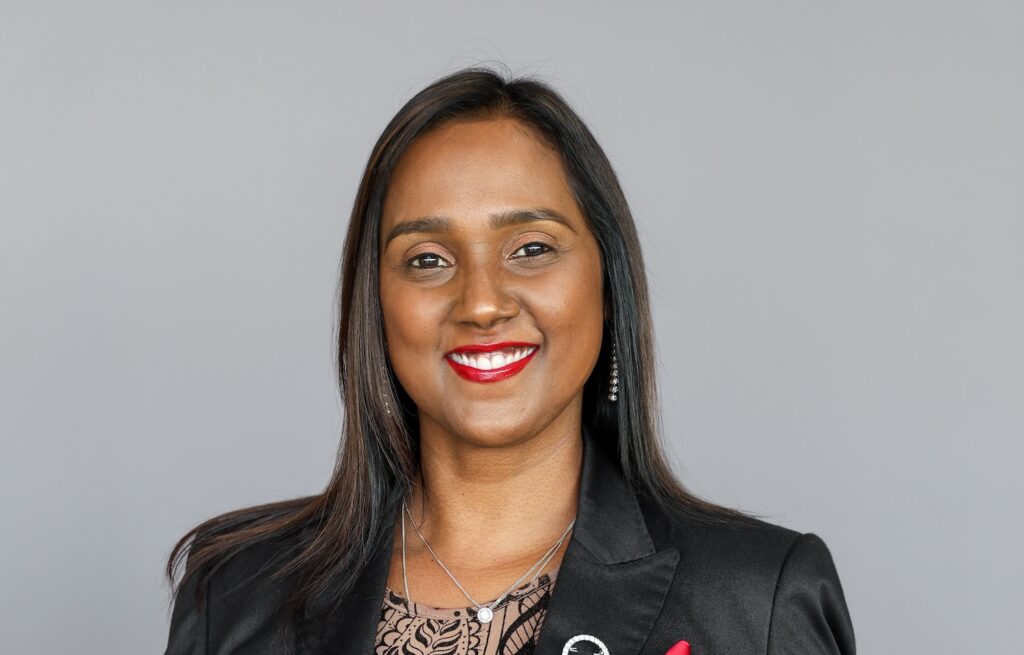
BASF in South Africa: Driving inclusive, sustainable impact at scale

Sponsored Content Who is BASF? At BASF, we create chemistry for a sustainable future. With 161 years globally and 60 years in South Africa, our portfolio spans chemicals, materials, industrial solutions, agricultural solutions, and nutrition and care, serving industries across the value chain. In South Africa, our role goes beyond products. We deliver innovative, sustainable solutions that enable customers to grow responsibly, while actively investing in local talent, supplier ecosystems, and communities. This ensures that economic success is not only delivered but also shared across society. The “Winning Ways” strategy BASF’s “Winning Ways” strategy is built on a clear ambition to drive profitable growth while creating sustainable value for society. Shaped by a 161 year global legacy and 60 years of local presence, the strategy focuses on: In South Africa, these priorities are deliberately aligned with national transformation goals. We bring this strategy to life by: This is executed through an integrated model that connects: Our Level 1 B-BBEE achievement reflects how this strategy translates into real impact, delivering transformation that is inclusive, investable, and sustainable. At its core, “Winning Ways” ensures that business success and societal progress remain inseparable. What sets BASF apart from the competition? What sets BASF apart is our investment led, outcomes driven approach to transformation, built on decades of global expertise and local commitment. Our achievement as the first non-South African multinational chemical company to attain Level 1 B-BBEE status reflects years of deliberate, sustained action. We create impact across three key areas: Through the BASF South Africa Trust, we have implemented 30% black women ownership, while supporting more than 60 female students in STEM, building future talent pipelines. Through graduates, apprentices, interns, and learners with disabilities, we provide hands-on experience and meaningful career pathways Our ESD programme invests R2-million to R6-million per enterprise, combining capital, capability, and market access to building sustainable businesses This integrated approach enables BASF to deliver lasting impact through jobs, ownership, and economic participation. Congratulations on being a Bronze Impact Sponsor for the Top Empowerment Conference. What does this opportunity mean to you and BASF? Being a Bronze Impact Sponsor reflects BASF’s commitment to actively shaping the transformation agenda in South Africa, building on 60 years of local impact. For BASF, this platform enables us to: Winning the Socio-Economic Impact Award affirms that our work is delivering measurable and scalable outcomes. Please share a message of inspiration with our readers. Transformation is built through consistent investment over time. For BASF, this journey is grounded in the belief that: As highlighted by our leadership: “Through investing in people, empowering suppliers, and advancing opportunities for women, we are shaping an inclusive and sustainable future.” Ultimately, real progress comes from turning access into opportunity, opportunity into ownership, and ownership into lasting impact.

How we can get digital transformation right in the public sector

Digital transformation public sector

By Prof. Linda Meyer, MD at Rosebank College When a government digital project fails, the post-mortem rarely points to the software. It points to the people — or more precisely, to the absence of decisive, visionary leadership at the helm. Across the public sector, from municipal councils to national agencies, a pattern has emerged: organisations that successfully harness technology to better serve citizens aren’t necessarily those with the largest budgets or the most sophisticated tools. They are the ones led by individuals who understand that digital transformation is, at its core, a human endeavour. The leadership imperative It has become fashionable to frame digital transformation as a technology problem. Procurement cycles are scrutinised, platforms are debated, and vendors are evaluated with painstaking rigour. Yet the uncomfortable truth is that most public sector digital initiatives don’t stall because of the wrong software, they stall because of the wrong leadership posture. Effective public sector leaders in the digital age are not administrators who happen to oversee technology budgets. They are strategists who understand how to align technology with public value, ethical accountability, and long-term societal outcomes. They ask not, “what can this system do?” but “what do our citizens actually need, and how does this get us there?” This distinction matters enormously. The public sector operates under constraints that private enterprise rarely faces: political scrutiny, limited budgets, entrenched legacy systems, union agreements, and a mandate to serve everyone — not just the digitally literate. Navigating this terrain requires leaders who are as comfortable in the boardroom as they are in the community hall. Setting a vision that goes beyond efficiency One of the most significant leadership contributions to digital transformation is articulating a compelling, user-centred vision. Too many public sector technology projects are sold internally as efficiency drives, cost-cutting exercises dressed in digital clothing. While efficiency matters, it is rarely sufficient motivation to carry an organisation through the inevitable turbulence of large-scale change. Leaders who succeed in digital transformation frame it differently. They connect technology adoption to a broader mission: faster access to social services, more transparent governance, better health outcomes, safer communities. When staff understand why the change is happening, and can see themselves as participants in something meaningful,  resistance softens, and momentum builds. This is not idealism. It is a strategy. Purpose-driven change management is consistently more effective than top-down mandate alone, particularly in public institutions where staff are often mission-motivated rather than incentive-driven. Championing change from the inside out Even the most visionary leader cannot transform an organisation single-handedly. One of the most underrated leadership skills in digital transformation is the ability to identify and cultivate internal champions, the mid-level managers, frontline workers, and IT staff who become advocates for change within their own teams. These champions serve as cultural translators, bridging the gap between strategic ambition and operational reality. They surface the friction points that leaders in senior roles never see, and they carry credibility with colleagues who might be sceptical of directives from above. Smart leaders don’t just appoint champions,  they create the conditions  for champions to emerge naturally by fostering psychological safety and rewarding experimentation over compliance. Sustaining momentum through bureaucratic headwinds Executive sponsorship is not a formality, it is a lifeline. Digital transformation projects in the public sector face a unique set of institutional pressures: budget cycles that don’t align with technology timelines, ministerial changes that reset priorities overnight, and procurement rules written before cloud computing existed. Leaders who maintain visible, active sponsorship of digital initiatives signal to the organisation and to external partners that this work matters and will not be quietly shelved when things get complicated. Without that signal, projects drift. With it, teams push through. Research from the OECD and the UK’s Government Digital Service consistently shows that the single biggest predictor of digital project success in government is sustained senior leadership commitment. Not the technology stack. Not the vendor. Leadership. Building the capabilities that technology demands Finally, no digital strategy survives contact with a workforce that lacks the skills to execute it. Leaders must make deliberate, often difficult decisions about where to invest not just in platforms and infrastructure, but in people. This means budgeting for digital skills training, recruiting specialist talent, and, critically, creating career pathways that make the public sector competitive with private industry. It also means being honest about what the organisation can build internally and what it needs external expertise to deliver. That judgment call, made well or poorly, can define the outcome of a transformation programme. The bottom line Digital transformation in the public sector will always involve technology. But it will always be decided by leadership — by the clarity of the vision, the courage to champion change, the discipline to sustain momentum, and the wisdom to invest in people as much as platforms. Governments that grasp this will build services their citizens deserve. Those who do not will continue buying technology they cannot use. Prof. Linda Meyer, MD at Rosebank College

The architecture of inclusive growth

Inclusive growth Kalnisha Singh

“We recognise that ESG has evolved significantly over the past decade. Yet, much like many overnight successes, the foundations were laid almost forty years ago.”

The next phase of transformation: Where policy, power and progress collide

Transformation

As South Africa’s transformation landscape continues to evolve, the Nedbank Top Empowerment Conference 2026 returns with a clear intention: to move the conversation beyond compliance and toward measurable, meaningful impact. Taking place this June in commemoration of Youth Day, the conference will once again convene the policymakers, executives, transformation leaders and innovators tasked not only with shaping policy, but with delivering outcomes in an increasingly complex environment. The Nedbank Top Empowerment Conference 2026 is made possible through the support of Nedbank as Platinum Partner, alongside Sanlam and SALGA as Gold Sponsors. Further support is provided by Industrial Development Corporation of South Africa Ltd as Silver Sponsor, Central Energy Fund, MCPM, INSETA, Prescient Investment Management, Mashudu Tinyiko Consulting, Sourceworx, Association of B-BBEE Professionals (ABP) and ASI Financial Services as Bronze Sponsors, as well as Isanti Glass as Bronze Partner. Additional organisations contributing to the programme and conference experience include Greysun as Networking Lounge Sponsor, alongside Showcase Sponsors Dataal Africa, Maribe, 21st Century Funeral Services, Labournet, LEAP + LAB17, Avo Vision, Diversifi, Moore Holding Group, Save the Children, KEI Solutions and Care More Foundation. Afrizan People Intelligence will also participate as an Exhibition partner. Event coverage will be led by SABC, our Platinum Media Partner, alongside strategic and media partners: Glynt, Primedia OOH, Mail & Guardian, Briefly News, Sunday World, BEE Online, Good Governance Africa and BPESA. Our lifestyle partners include: Nespresso, Jenna Clifford Designs, Isanti Glass, GQ Tissues, BICS and Mvula Drops. The 2026 programme reflects a decisive shift in focus. Transformation is no longer viewed purely as a regulatory exercise, but increasingly as an economic imperative tied directly to competitiveness, investment readiness and long-term resilience. Discussions throughout the two-day conference will examine how organisations can recalibrate their strategies by prioritising high-impact interventions, embedding inclusion into decision-making structures, and ensuring that empowerment initiatives deliver measurable value in rapidly evolving economic conditions. Conversations will further interrogate how empowerment financing, infrastructure investment and ESG strategies can be leveraged not only to meet compliance requirements, but to unlock broader participation, industrial growth and sustainable economic opportunity. From supplier development funding to large-scale infrastructure delivery, the emphasis is shifting toward how capital can be structured and deployed to support measurable transformation outcomes at scale. A strong focus will also be placed on collaboration as a driver of economic inclusion. With youth unemployment remaining one of South Africa’s most urgent challenges, the programme explores how aligned partnerships between the public and private sectors can unlock funding, support entrepreneurship and create pathways into meaningful employment. Set against the backdrop of South Africa’s evolving socio-economic landscape, the 2026 conference represents both a moment of reflection and a call to action. It is a platform designed for leaders who recognise that the next phase of transformation will require sharper execution, deeper collaboration and a renewed focus on measurable outcomes. The conference will also feature the live unveiling of the 25th anniversary edition of Impumelelo: Top Empowerment Companies, marking a significant milestone in documenting  South Africa’s transformation journey while reflecting on the road ahead. For leaders navigating increasing complexity across transformation, ESG, inclusion and economic development, the Nedbank Top Empowerment Conference remains a critical platform where strategy meets accountability and where the future of inclusive growth is actively shaped. For tickets and registration: https://qkt.io/TopEmpowerment2026 For remaining sponsorship opportunities across the conference and publication, contact: marketing@topco.co.za

AI empowerment: The future of work in South Africa

AI empowerment

In an ever evolving digital economy, evidence is mounting that organisations with strong digital and AI capabilities outperform their peers by a wide margin, not only in productivity but in resilience and long term value creation.