By Thulani Dube
There is an undeniable critical role mobility plays in economic development, social inclusion and national competitiveness. This conversation must, without a doubt, extend beyond roads, railways and vehicles, especially in an era defined by artificial intelligence, digital transformation and climate change. It must confront and address a more fundamental issue on how innovation can transform transport from a means of movement into an engine of economic opportunity.
Transport is more than infrastructure. It connects people to employment, students to education, businesses to markets, and communities to essential services. When transport systems fail, economic participation suffers. When they function efficiently, they unlock productivity, investment as well as inclusive growth.
For South Africa, where historical spatial inequalities continue to shape commuting patterns, innovation in transport is not merely a technological ambition. It is a socioeconomic imperative.
South Africa’s transport sector presents a fascinating paradox. While the country possesses relatively sophisticated road, rail and logistics infrastructure, millions of citizens continue to experience unreliable, expensive and fragmented transport services.
Rethinking traditional mobility models through innovation
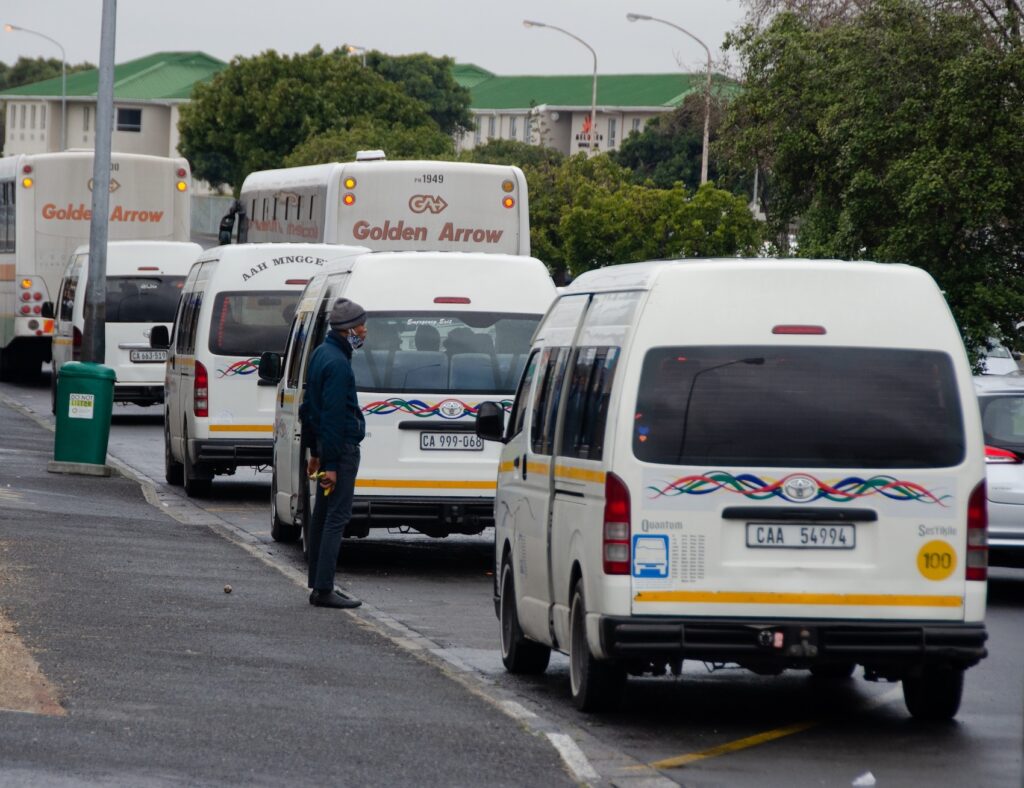
However, these challenges are creating opportunities for entrepreneurs, policymakers and forward thinking executives to rethink traditional mobility models. One compelling example is LOOP, a South African mobility technology startup founded by Imtiyaaz Riley and Jamie Wyngaard. LOOP leverages technology to modernise the established minibus taxi industry while also enhancing operational efficiency, improving service delivery and accelerating the sector’s digital transformation.
Its platform enables commuters and businesses to arrange shared transport through WhatsApp, while incorporating digital payments, automated route planning and driver coordination. This approach recognises an important reality that meaningful innovation does not always require replacing existing systems. Sometimes, the greatest opportunity lies in making those systems more efficient, accessible and accountable.
In April 2025, LOOP reported serving over 30 000 WhatsApp users, working with approximately 500 drivers and facilitating over 15 000 rides on a monthly basis . These figures demonstrate how locally developed solutions can address practical mobility challenges while creating commercially viable opportunities.
LOOP also offers an important leadership lesson. Its founders identified an underserved market, understood the lived experiences of commuters and operators, and developed technology appropriate to local conditions.This is innovation driven by empathy, not simply technological sophistication.
Demonstrating public sector leadership in advancing sustainable mobility
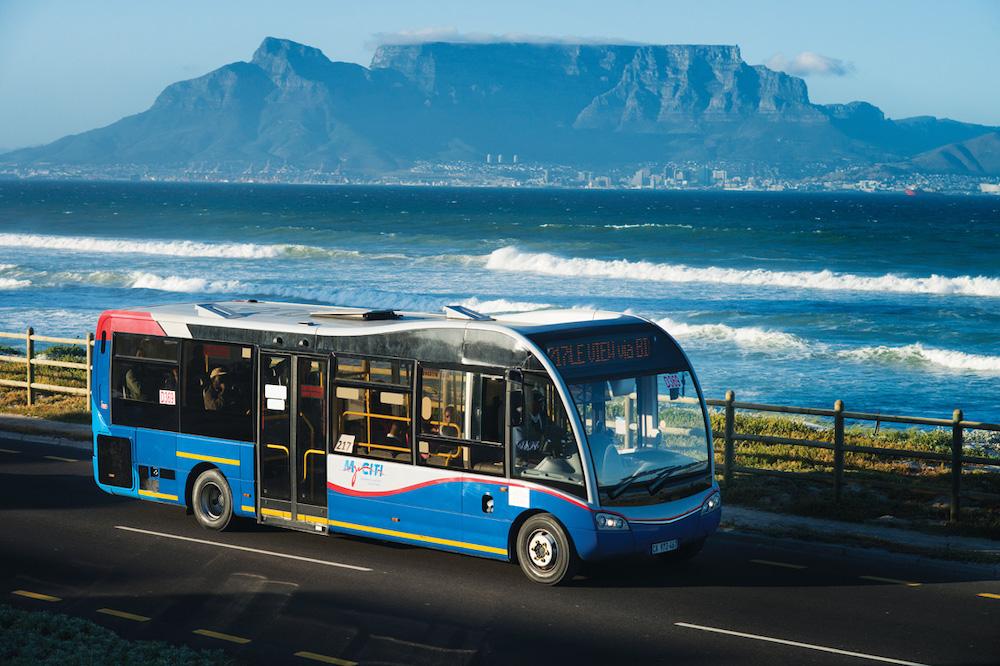
At an institutional level, Cape Town’s MyCiTi bus system is demonstrating how public sector leadership can advance sustainable mobility. In July 2026, the City announced that its first fully electric MyCiTi bus had completed performance testing, alongside an initial order for 38 electric buses. These vehicles form part of a broader expansion intended to improve connectivity across communities historically underserved by formal public transport. Additionally the bus bodies of the electric MyCiTi bus, nicknamed “Evie” will be manufactured locally in Gauteng, further adding to the development of the local manufacturing economy.
Similarly, Gautrain’s next phase of modernisation includes plans for integrated digital ticketing, improved feeder services and a Mobility-as-a-Service platform.The Gautrain’s planned Mobility-as-a-Service (MaaS) platform represents an important step towards a more integrated public transport system in South Africa.
By connecting journey planning, real time travel information, digital ticketing and feeder services, the MaaS aims to simplify commuting and improve connectivity between different transport modes. This initiative illustrates how digital innovation and strategic leadership can enhance commuter convenience, improve operational efficiency, and support a more accessible and connected transport ecosystem.
Pioneering mobility models through innovation in Africa
As the local ecosystem develops, it is also important to be aware of Africa’s emerging transport Innovation Ecosystem. Across Africa, entrepreneurs are demonstrating that the continent need not simply import mobility solutions developed elsewhere. It can pioneer models that respond to its distinctive economic, infrastructural and social realities.
BasiGo, in Kenya, is accelerating electric public transport through an innovative “Pay As You Drive” model. By combining vehicle financing, charging infrastructure and maintenance, it reduces the financial barriers that prevent traditional bus operators from adopting electric vehicles.
Ampersand, which operates across Rwanda and Kenya, has developed electric motorcycles and battery swapping infrastructure, addressing operating costs and the practical challenges of charging for commercial motorcycle riders.
These examples highlight a critical distinction. They point out that Africa’s transport transformation is not exclusively about technological advancement. It is equally about innovative financing, accessibility and most importantly, business model transformation.
Demonstrating
Demonstrating transport innovation through integrated mobility systems
Internationally, transport innovation is increasingly defined by integrated mobility systems, intelligent infrastructure and sustainability.
Singapore, for example, provides a compelling example of coordinated urban transport planning where public investment, integrated rail and bus networks and intelligent traffic management technologies support a connected mobility ecosystem. China’s investment in high speed rail and electric mobility demonstrates the transformative potential of long term infrastructure planning, industrial policy and technological development. Meanwhile, European cities such as Amsterdam and Copenhagen illustrate how prioritising cycling, pedestrian infrastructure and public transport can contribute to more accessible and environmentally sustainable urban environments.
Moving towards integrated transport leadership – the lesson for South Africa
The lesson for South Africa is not to replicate these models indiscriminately. Our economic circumstances, settlement patterns and transport challenges differ considerably. Instead, leaders in the transport sector in South Africa must adapt their underlying principles of long term strategic planning in order to drive sustained investment in innovation. The most successful transport ecosystems are not necessarily those with the most advanced technologies, but those that integrate technology, infrastructure and human needs into a coherent strategy.
While technology often dominates discussions about transport transformation, innovation ultimately succeeds or fails through leadership. Visionary leaders recognise that transformation requires more than investment in infrastructure or the adoption of emerging technologies. It demands an organisational culture that encourages experimentation, collaboration and continuous improvement.
In South Africa, this requires a fundamental shift from fragmented institutional decision-making towards integrated transport leadership. The government, transport operators, technology startups, financial institutions and academic organisations must collaborate to develop solutions that are both commercially sustainable and socially inclusive.
Leaders must support the building of collaborative innovation ecosystems. Public-private partnerships should extend beyond infrastructure procurement to include startup incubation, research partnerships and innovation pilots that address real mobility challenges. They must embrace data driven decision-making and invest in future-ready skills. It is imperative that leaders leverage artificial intelligence, predictive analytics and real time transport data to improve on issues such as route optimisation, infrastructure maintenance, commuter safety and operational efficiency among other transport related initiatives.
Transport transformation requires new capabilities in digital systems, creating the opportunity for greater collaboration with academic institutions. Technological advancement must not deepen existing inequalities. Solutions should remain accessible to underserved communities, informal transport operators and citizens with limited digital connectivity.
Importantly, leaders must be willing to challenge conventional thinking. The future of transport will not emerge exclusively from established institutions. It will also be shaped by entrepreneurs who understand overlooked challenges and possess the courage to rethink existing systems.
Building an inclusive, sustainable transport ecosystem that moves an entire nation forward
Greater reflection is therefore crucial especially as South Africa commemorates Transport Month. The convergence of artificial intelligence, electric mobility, digital payments and intelligent infrastructure offers the potential to reshape how citizens and businesses move.
However, technology alone cannot overcome decades of structural inequality, fragmented planning and institutional inefficiency. What is required is leadership that combines strategic vision with practical execution, leadership that combines innovation with inclusion as well as economic ambition with social responsibility.
South Africa already possesses the entrepreneurial talent, institutional capabilities and emerging technologies necessary to lead aspects of Africa’s mobility transformation. The challenge is to connect these strengths through purposeful partnerships, supportive policy and sustained investment.
The question facing today’s transport executives is therefore no longer simply how to move people and goods more efficiently. It is how to build a transport ecosystem that expands opportunity, strengthens economic competitiveness while simultaneously creating a more connected society that subsequently moves an entire nation forward.
More importantly, in an environment of rising fuel prices and economic uncertainty, transport leaders must make innovation a strategic priority rather than a discretionary investment. Building resilience requires accelerating the adoption of innovative strategies. Ultimately, resilient transport organisations will be those that turn economic pressures into opportunities to innovate, improve efficiency and deliver sustainable, affordable mobility.