The heritage month question South African workplaces must answer
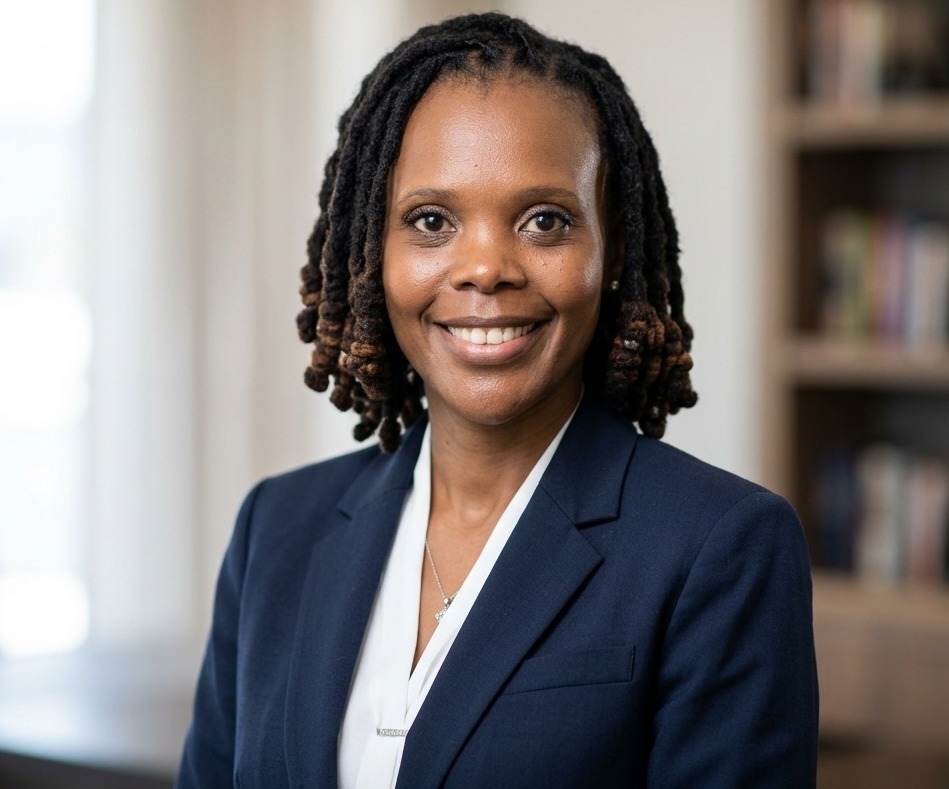
By Shatadi Rebecca Kganyago
Every September we celebrate our languages, traditions, food, music, histories and identities. Heritage Day gives us an opportunity to reflect on the cultures and traditions that make South Africa what it is. But there is another place where our heritage meets every day: The workplace. And unlike a Heritage Day celebration, the workplace does not end when the music stops. People have to sit in meetings together. They have to give and receive feedback. They have to challenge managers, resolve disagreements, make decisions and meet deadlines. They have to work alongside people whose languages, cultural traditions, beliefs and social experiences may be very different from their own. That is where the real test of inclusion begins.
Are South African organisations genuinely accommodating cultural diversity, or are employees simply expected to fit into an existing organisational culture?
My research, examining the impact of cultural diversity on organisational communication in selected South African organisations, suggests that this question deserves considerably more attention. The study involved employees and stakeholders from different cultural, linguistic, professional and social backgrounds, including HR professionals, marketing and communication employees and general employees from junior level to top management. Language and discrimination remain significant challenges The findings reveal both the challenges and the opportunities created by workplace diversity.
One of the most notable findings was that 80% of participants identified language and discrimination as challenges. That finding is significant in a country with 12 official languages and a workforce shaped by different cultural and linguistic identities. Communication is often treated as though words have universal meanings. They do not. The way people communicate can be influenced by culture, upbringing, professional environment and expectations about hierarchy. A direct communication style, for example, may be interpreted by one employee as efficient and honest. Another employee may experience exactly the same communication as aggressive, disrespectful or rude. Silence can create similar misunderstandings. An employee who does not openly challenge a manager may believe they are showing respect for authority. The manager, however, may interpret that silence as a lack of confidence, disengagement or initiative. Neither person necessarily intends to create a problem. But without cultural awareness, the difference in interpretation can become one. And once communication breaks down, workplace relationships can quickly follow.
When policy meets reality
Organisations increasingly have diversity and inclusion policies. But having a policy and living that policy are two different things. The research examined whether organisations had diversity policies and, more importantly, whether those policies were reflected in everyday workplace practices. It also explored how HR departments responded when employees experienced cultural clashes, discrimination, bullying or other forms of conflict. For employees, the research asked a different but equally important question:
Do you actually feel included?
An organisation may have a diversity policy on paper while employees experience exclusion in meetings, conversations, promotions, management relationships or everyday interactions. This is where organisational culture becomes important. Every organisation develops its own culture; a combination of values, behaviours, traditions, expectations and ways of doing things. But the question is whether organisational culture acts as an umbrella for the cultures represented by its employees, or whether the dominant organisational culture overwhelms those differences and expects employees to conform.
Gender, sexuality and belief add another layer
The research also highlighted experiences relating to gender and LGBTQ+ inclusion. Women in senior management reported experiences of being belittled or challenged by male colleagues because they are women. Some LGBTQ+ employees also reported experiencing discrimination in the workplace. The study further encountered tensions surrounding religion and African traditional spiritual practices. An interview participant, a Christian employee, withdrew from the research because she was uncomfortable responding to questions about working with LGBTQ+ colleagues and people who practise African traditional spirituality. The incident itself raises difficult questions about workplace inclusion. How does an organisation create a working environment where employees are free to hold their personal beliefs while also being expected to treat colleagues with dignity and respect? And what happens when a person’s personal beliefs conflict with the principles of inclusion required in a professional environment? These are not easy questions. But avoiding them does not make them disappear.
Diversity is not the problem
It would be easy to look at these findings and conclude that cultural diversity creates workplace conflict. That would miss the bigger picture. The problem is not cultural diversity itself. The problem is what happens when organisations do not equip people to communicate across differences.
The research also revealed the positive potential of diversity. Different cultural perspectives can contribute to stronger problem-solving, new ideas and innovation. Employees who approach problems differently can challenge assumptions that might otherwise go unquestioned. A diverse workforce therefore has the potential to make organisations stronger. But diversity does not automatically produce inclusion. People need the skills to work across differences. Managers need the ability to recognise cultural misunderstandings rather than immediately interpreting them as poor performance or bad attitude. HR needs mechanisms for addressing discrimination and cultural conflict. Employees need to understand that difference does not automatically mean disrespect. And organisational leaders need to recognise that inclusion is not achieved simply by employing people from different backgrounds.
From diversity celebration to cultural intelligence
Perhaps this is the conversation Heritage Month needs to have with South African workplaces. We are good at celebrating diversity. We know how to celebrate our languages, food, music and traditional clothing. But inclusion requires something more difficult. It requires us to understand one another. That means developing cultural intelligence, the ability to recognise cultural differences, understand how they influence behaviour and communication, and respond appropriately rather than relying on stereotypes and assumptions. It means asking why an employee communicates in a particular way before judging that behaviour. It means understanding that disagreement does not necessarily represent disrespect. It means creating workplaces where employees do not have to suppress important parts of their identity simply to succeed. And it means ensuring that diversity policies are not documents that sit in an HR folder, but principles reflected in recruitment, leadership, communication, conflict resolution and everyday workplace behaviour.
The Heritage Month challenge
South Africa’s cultural diversity is one of its defining characteristics. But diversity is easy to celebrate when everyone is smiling, dancing and wearing traditional clothes. The harder question is what happens on Friday or Monday morning?
- What happens when the employee who speaks differently enters the boardroom?
- What happens when a woman challenges a male manager?
- What happens when an employee’s religious beliefs differ from those of a colleague?
- What happens when an LGBTQ+ employee expects the same dignity and respect as everyone else?
- What happens when two employees interpret the same words completely differently because they come from different cultural backgrounds?
- And what happens when organisational culture itself becomes so dominant that there is little room for employees to bring their own identities into the workplace?
These are not merely HR questions. They are questions about leadership, communication, productivity, employee wellbeing, organisational performance and the kind of working society South Africa wants to build. Heritage Month gives us an opportunity to celebrate who we are. But perhaps its more important purpose is to make us ask how we live with one another after the celebrations are over.
We need organisations where difference does not automatically become conflict, where policies become practice, where employees do not have to suppress their identities to succeed, and where cultural diversity is treated not merely as something to celebrate but as something to understand and manage responsibly.
Heritage Month gives us an opportunity to celebrate who we are. But celebration is only one part of inclusion. The real test begins when the music stops, the traditional clothes are put away, and we return to work. So perhaps this Heritage Month, every South African organisation should ask itself one uncomfortable but necessary question:
Shatadi Rebecca Kganyago is a PR Professional and holds a Master of Arts in Communication Science from the University of South Africa (UNISA). Her master’s dissertation examined the impact of cultural diversity on organisational communication in selected South African organisations, with particular attention to workplace inclusion, communication, organisational culture, discrimination and the implementation of diversity policies.