Sponsored Content
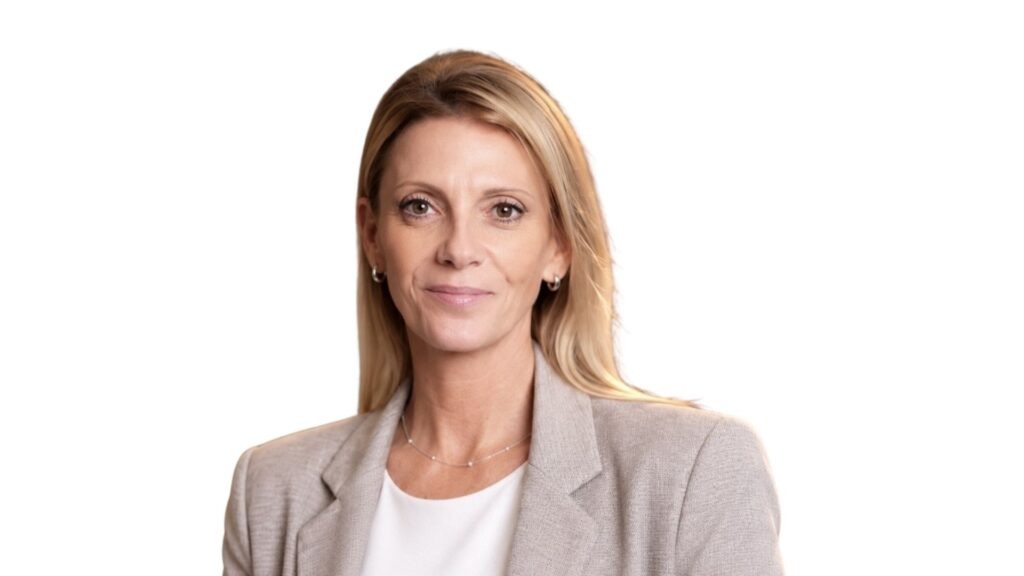
By Amanda Hetherington, Head of Marketing, Altron Document Solutions
Ask any executive if they are interested in improving successful decision-making by 15% and I’m sure the answer will be a resounding “yes”. Research by Forbes suggests that gender diverse teams make better business decisions and succeed 73% of the time compared to non-gender diverse teams. So what do we do then?
Well, as Shirley Chisholm is quoted as saying: “If there is no seat at the table, bring a chair.” I like to return to this principle when asked how I’ve navigated what is traditionally a male-dominated corporate environment. Personally, it’s been about creating and taking opportunities, but it hasn’t always been easy.
We’ve all been there. You’re sitting in a meeting where the conversation is moving quickly, you have a great idea, but before you can share it, someone else speaks. You finally give your input and it’s acknowledged politely. Moments later, a similar idea is offered by someone else and this time it sparks a bigger conversation.
Ever had this experience? It’s not because we lacked expertise, but because being heard has often required more than simply having something valuable to say. Usually these situations have me asking myself, “Why didn’t I speak up sooner?”, followed by, “What did they say that made their input more impactful than mine when the concepts were the same?”. Here’s what I’ve learned: many women – like me – wait for that rush of confidence before taking the next step. But confidence and courage are not the same thing. You don’t have to be the most confident person in the room to be valuable. You just need to have the courage to speak anyway.
“Confidence begets confidence” is also something I have found myself returning to but strangely enough I don’t know who said this or what their initial intent was with the words, but for me it’s always been about, ‘If I act confident, people will believe I am confident’ – even when I’m trembling inside! But as you speak-up more and more, your confidence builds because your voice is heard, your input is valued and the trembling isn’t as ‘trembly’ as it once was!
And let’s talk openly and honestly about the pressures – the often-relentless pressures – trying to achieve and then balance the perfect career with real life: family, health, appearance and of course, personal fulfillment. It can be overwhelming. We know that this shapes how women show up professionally, affecting confidence, affecting advocacy, affecting decisions about whether to take that promotion or speak up in that meeting. This isn’t a personal failing and many of us feel this, but it needs acknowledging.
And now some good news. When you’ve had to influence without having authority, you learn to listen before you speak. When you’ve had to build credibility over-and-over again, you become intentional about relationships. When you’ve learned to navigate uncertainty, you become comfortable asking better questions instead of rushing to answers. These are not ‘soft skills’, they are the capabilities increasingly defining exceptional leadership.
And then there’s ever-changing technology reshaping every industry, celebrated as the defining capability of the future. And certainly, artificial intelligence can process faster than any human and automation optimises workflows, but what technology cannot replace is human judgement – and judgement is shaped by the people in the room where decisions are made.
And that is where women in leadership matter. It’s not about representation alone – when leadership teams include people with different experiences, they ask different questions, they identify risks others miss, they build products and services that better reflect the communities they serve. And women’s perspectives are not an addition to innovation; they are fundamental to it.
If we want to see more women in leadership in South Africa, we need to be deliberate about certain things:
Firstly, women need access to opportunities. We need to be in roles where decisions are made, going beyond mentorship and being deliberate about sponsorship where sponsors use their capital to advocate, rather than just advise.
Psychological safety is essential. Organisations serious about diverse leadership create environments where different approaches are genuinely welcomed. That means rewarding collaboration alongside healthy competition and recognising that leadership looks different across different people.
Look to the future. When young women see other women leading and shaping their organisations’ futures, the possibilities become real. It’s no longer abstract – it’s achievable.
Leadership has always been about making decisions that people are willing to follow, which requires trust. And trust is built through empathy, strengthened through relationships, informed by critical thinking and sustained by ethical leadership.
Whilst technology offers us many extraordinary advancements – in science, healthcare, finance, etc. – leadership will still determine whether the future is simply more advanced, or genuinely better.
For women professionals stepping into leadership: your perspective is valuable precisely because it is different. And that is what is needed now. You don’t need to be the loudest voice in the room. You just need to be willing to pull up a chair and contribute.